
Less Outrage. More Life.
A year-end note on silver linings, discipline, and the kind of hope that holds.

December 30 is a weird day to write anything honest.
The year is basically over, but we’re not quite in the fresh-page feeling of January. It’s a threshold day—close enough to look back clearly, not far enough away to pretend.
So here’s my 2025 in a sentence:
Silver linings don’t float down from the sky. You usually have to go find them. Sometimes you have to make them.
And this year, more than any “hack” or breakthrough, I felt the value of a different kind of progress:
Less outrage. More life.
Not because outrage is never justified. Sometimes it absolutely is. But because I’ve learned how easily outrage becomes a substitute for courage, for presence, for discipline—for actually doing the hard things that change a life.
Silver linings, on purpose
One of the unexpected “silver linings” for me this year was starting this Substack—not as another content stream, but as a deliberate counterweight to the atmosphere we’re all breathing.
This has been a year filled with outrage-bait, cynical headlines, and articles written to spike your blood pressure and keep you scrolling. The incentive structure is obvious: fear travels fast, resentment travels faster, and nuance is an inconvenience.
So I wanted to write differently.
I wanted to build a little corner of the internet that was nuanced and grace-forward—not soft, not evasive, not naïve… but willing to tell the truth in full sentences. Willing to hold complexity without turning everything into a dunk.
If you’ve read along, you’ve seen the themes. Sometimes the writing is personal, like Drifting From Evangelicalism, Clinging to Christ. Sometimes it’s more cultural critique, like Cui Bono: Who profits from your outrage?. Sometimes it’s trying to name a moral line in the sand without turning people into caricatures—like Voting vs. Vouching.
If nothing else, writing this year reminded me: you don’t stumble into depth. You choose it.
What I built (and why it mattered)
Two big public moves defined my year.
1) I started this Substack.
Not because the world needed more content. It probably didn’t. I started it because I wanted a place to think in full sentences again—to write like a human, not a brand. To put words to the ideas I keep circling: faith, culture, masculinity, belonging, politics, entrepreneurship, contentment, hope.
Writing has a way of pulling the curtain back. It forces you to stop hiding behind vibes. It makes you accountable to your own thoughts. That’s uncomfortable—and also a gift.
2) We launched SPO 33.
SPO 33 has been an aspirational idea for years—one of those “someday” visions you carry around because it feels meaningful, but also risky. This year, we finally bet on ourselves and made it real.
Menswear sounds superficial until you do it seriously. Then you realize it’s not primarily about cloth. It’s about craft. Standards. How people want to feel when they walk into the world. It’s about helping someone show up as themselves—on purpose.
Launching something from scratch is humbling. It asks you to hold confidence and uncertainty at the same time. It demands discipline. And it forces a question I keep returning to:
Do I want the identity of being someone who builds things… or do I want the actual work of building?
This year pushed me toward the second.
And here’s the bridge I didn’t expect: the more I committed to building real things—writing with care, betting on ourselves with SPO 33, investing in community—the less patience I had for the cheap dopamine of outrage that feels like engagement but rarely produces anything good.
What I learned again (because apparently I need repetition)
I found myself re-learning a simple truth in new packaging:
Discipline is one of the most underrated forms of hope.
Discipline is choosing the hard thing while your feelings argue for the easy thing. It isn’t romantic. It doesn’t trend. It doesn’t get applause. But it’s the difference between wishful thinking and a life that actually changes.
A lot of people talk about “manifesting.” I get the appeal. But I’m more convinced than ever that most of what we call “breakthrough” is really just consistency that didn’t quit.
This year, the best moments didn’t come from cleverness. They came from showing up.
One more reinvention: my AI mindset shift
This summer, I found myself in a place of hesitancy and skepticism about AI.
Not in a dramatic way—more like a posture. A little guarded. A little suspicious of the hype. And honestly, some of my skepticism is still intact, especially when people start talking about AGI as if it’s inevitable, or when AI is framed as a clean replacement for human labor rather than a tool that should serve people.
But I also had to admit something about myself: I was letting skepticism become an excuse to stay on the sidelines.
So I did what I’ve had to do more times than I’d like to admit: I learned something new. Again.
The learning itself wasn’t hard. The hard part was changing my mindset—moving from “I’m skeptical, therefore I don’t need to engage” to “I can be skeptical and curious at the same time.”
I’m still not starry-eyed. I’m not abandoning my concerns. But I’m more convinced now that opting out isn’t a strategy—especially if you care about how technology shapes human life.
Five themes that kept coming back
As I look back, five themes repeated themselves—sometimes as encouragement, sometimes as confrontation.
1) Belonging
I’m more convinced than ever that belonging requires making space for others to belong.
Not everyone walks into a room and instantly feels safe or welcomed. Some people have spent years bracing for rejection.
Belonging isn’t just a feeling. It’s a practice.
If I want community, I can’t just consume it. I have to create it. I have to host. I have to invite. I have to risk being the person who cares first.
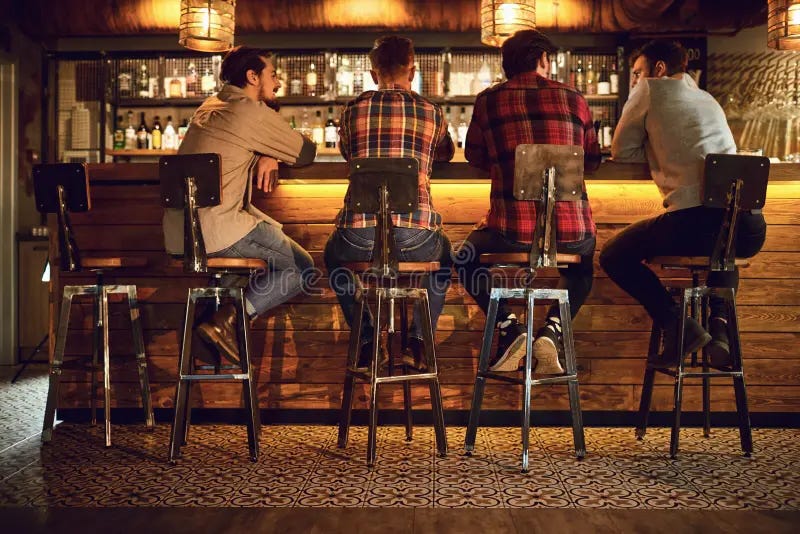
That’s one reason Happiest Hour mattered this year. Regular rhythms beat occasional inspiration. Community isn’t built by grand gestures. It’s built by repetition.
One lived detail I love: I’d been encouraging my friend Chris to come for a while. He finally started showing up—and then started showing up again. This year he became a regular, and I’ve watched him genuinely benefit from the community. It’s a small thing that’s actually not small at all: a person choosing presence, and being met with welcome.
2) Masculinity
I’ve come to believe more deeply that masculinity, at its best, is not aggression or dominance.
It’s strength under control.
Self-control. Restraint. Courage without cruelty.
The older I get, the less impressed I am by performative toughness—and the more impressed I am by the man who can stay calm, tell the truth, keep his word, apologize without making excuses, and refuse to be manipulated by outrage.
3) Entrepreneurship
Entrepreneurship is one of the fastest ways to discover your actual theology of control.
You can’t “optimize” your way out of uncertainty. You can’t spreadsheet your way into courage. You can plan, prepare, and work hard—but building something still requires faith. Not faith as denial. Faith as action:
Show up. Do the work. Learn. Adjust. Repeat.
4) Contentment
This year clarified something I didn’t want to admit:
Contentment requires knowing yourself.
Not the curated you. The real you. The you who can name what you actually want—without copying someone else’s life.
Contentment isn’t apathy. It’s freedom. It’s wanting things without being owned by wanting. It’s ambition that doesn’t become a god.
5) Hope
I’m increasingly convinced that hope isn’t optimism.
Hope is faith in justice.
It’s the stubborn decision to believe that truth matters, that goodness is worth pursuing, and that the moral arc doesn’t bend by accident—it bends because people keep putting their hands on it.
Hope is not ignoring what’s broken. Hope is refusing to surrender to cynicism.
And cynicism is tempting right now. It’s basically the default posture of the internet. But cynicism isn’t wisdom—it’s often a defense mechanism. It’s a way to feel smarter than you are brave.
And to be fair: some people aren’t cynical because they’re smug; they’re cynical because they’re exhausted, grieving, or overwhelmed by what they can’t carry alone. I get that. I’ve felt that.
I’m just trying not to make cynicism my home.
What I want in 2026
I want:
More focus (attention is a moral choice, not just a productivity one)
More friends (not more followers—more actual relationships)
More joy in the middle of chaos and uncertainty (not someday—now)
And I want less:
Less cynicism
Less wasted time on things that don’t matter
Less outrage and worry about what I can’t control
Practically, that means: keep writing regularly, get back to consistent workouts, and spend more intentional one-on-one time with friends—depth over noise.
An invitation
If you’ve been reading along, I’d love to hear from you:
What was the most important thing you learned this year?
Not the most impressive thing. The most true thing.
And if you’re local—or ever in town—come to Happiest Hour sometime. It’s simple: show up, have a drink (or don’t), meet a few good people, and remember that the world is more than headlines and algorithms.
Because one of the most quietly radical things you can do right now is build a life that isn’t primarily shaped by outrage.
Here’s to silver linings you don’t just notice—
silver linings you choose.
Quick housekeeping: This will be my last post until next Monday, January 5th. In the meantime, I’d love your input—what topics would you like more content from me on in 2026? If you’ve got ideas (or even questions you want me to take a swing at), drop them in the comments.