
Voting vs. Vouching: When Evangelicals Defend What They Used to Condemn
Evangelicals didn’t just vote—they defended. And that defense is forming us.

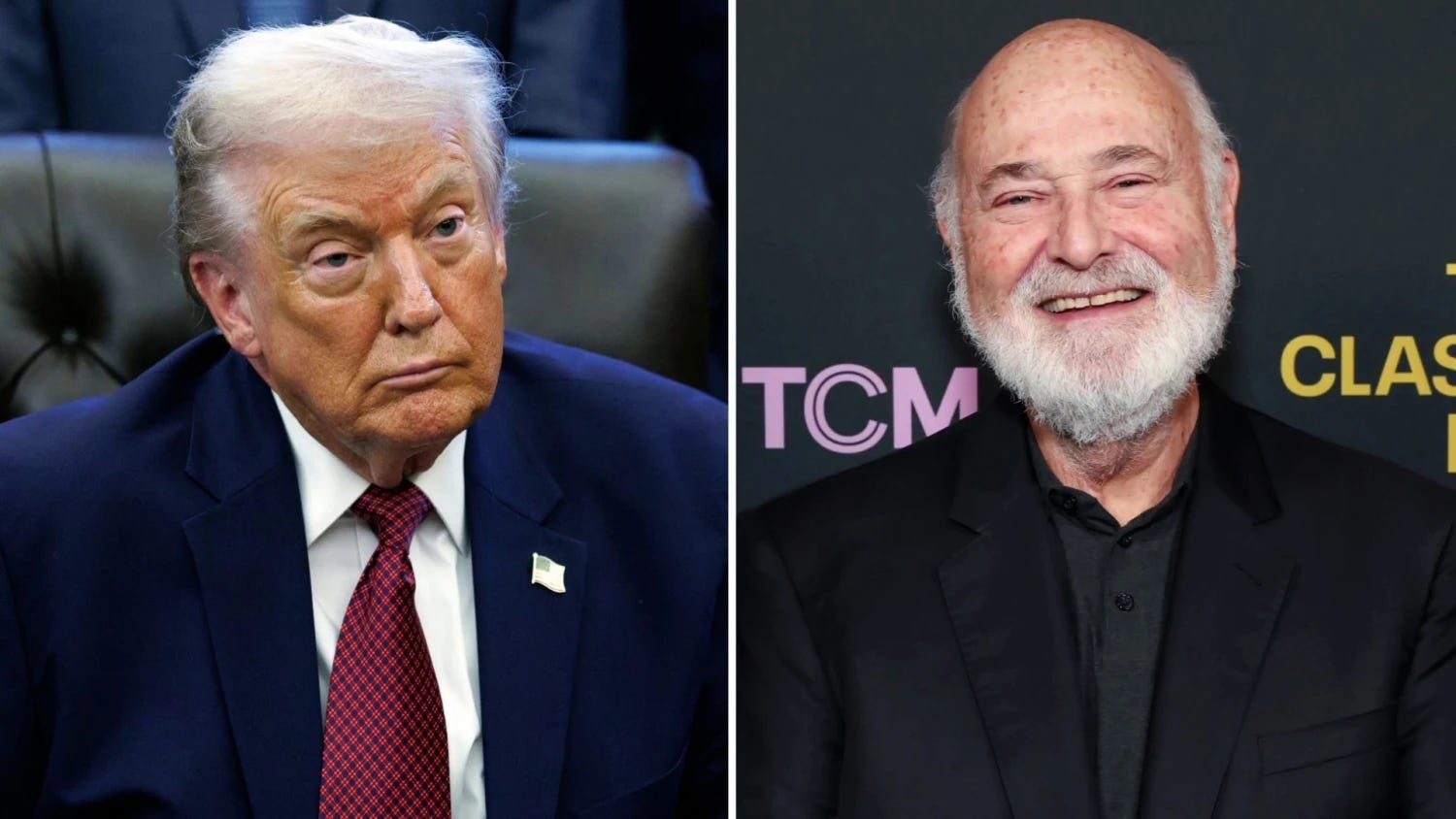
I saw the news about Rob Reiner and his wife, Michele Singer Reiner—killed at their home, with their adult son arrested in connection with their deaths.
Before I say anything else: this isn’t a “gotcha” built on a tragedy. It’s the opposite. It’s grief—and then recognition. Moments like this reveal what our leaders reach for when the normal scripts of politics should fall silent.
And then I saw what President Trump chose to say about it.

Not a measured word. Not a moment of restraint. He used the moment to attack Reiner—invoking “Trump Derangement Syndrome” and mockery rather than mourning.
That’s the moment I want to interrogate—not because I’m interested in performative outrage, but because it exposes something deeper about what many American evangelicals have learned to tolerate, excuse, and eventually defend.
One important clarification up front: I’m mainly talking about white evangelical political culture, because that’s where the public posture—and the data—are most concentrated.
Because I can understand a Christian who says, “I held my nose and voted for policies I care about.”
I grew up conservative. I identified as Republican most of my life. I understand how a lot of evangelicals felt cornered—especially in 2016 and beyond. I’ve heard the case in its strongest form, and I can articulate it in a way many of my friends would recognize:
The courts matter.
Abortion matters.
Religious liberty matters.
The cultural ground feels like it’s shifting under our feet.
And the other side sometimes feels openly hostile to our convictions.
So we voted defensively—imperfect man, necessary outcome.
I’m not pretending I don’t understand that logic.
But my concern isn’t primarily the ballot.
My concern is the ongoing support—the active and passive vouching—for a president whose public life is marked by contempt and intimidation, and whose relationship with truth is, at best, transactional.
There’s a difference between voting and vouching
Voting can be transactional:
“I chose a platform, and I’m not pretending the candidate is admirable.”
Vouching is formational:
“I defend the man. I minimize the cruelty. I reframe viciousness as courage. I call lies ‘strategy.’ I treat opponents as enemies. I baptize it all as necessary for ‘our side.’”
Somewhere along the way, far too many evangelicals moved from voting to vouching.
And if that sounds like an overstatement, the numbers suggest we’re long past “reluctant.”
Pew reported in April 2025 that 72% of white evangelical Protestants approved of Trump’s job performance. PRRI’s analysis of 2024 voting found more than eight in ten white evangelicals voted for him.
That’s not merely “lesser of two evils.” That’s a durable bond.
And PRRI found something even more revealing: 60% of white evangelical Protestants agreed with the statement that “God ordained Donald Trump to be the winner” of the 2024 election.
That isn’t just politics. That’s moral endorsement dressed up as theology.
Let’s be specific, but not endless
This is where evangelical commentary often goes vague—generalities, vibes, whataboutism. So I want to name three patterns, and only three.
1) Cruelty and contempt, especially when the moment calls for gravity
The Reiner post is a clean example because it costs nothing to show restraint. A death is not a debate stage. And yet the president chose mockery—and then defended it publicly.
What matters here isn’t one post. It’s the reflex. The posture.
And I’m not claiming evangelicals enjoy this. I’m saying we’ve watched ourselves excuse it, downplay it, laugh it off, or defend it—until it starts to feel normal.
2) Treating truth as optional when it’s politically useful
Reuters and PBS documented Trump’s repeated false or unsupported claims about election fraud/rigging during the 2024 cycle.
Even if you agree with him on ten policy issues, a leader who uses falsehood as a tool trains everyone watching to do the same—because the lesson becomes: truth is negotiable when the stakes feel high enough.
3) “Enemy” rhetoric that poisons civic life
During the 2024 campaign, Trump repeatedly used “enemy from within” language about domestic opponents, including comments suggesting such “enemies” could be “handled” by force.
You can argue policy all day. But once you normalize the idea that your fellow Americans are enemies to be “handled,” you’re no longer doing democratic persuasion. You’re flirting with something darker.
And Christians—of all people—should not be the ones normalizing that.
What’s going on underneath?
I don’t think most evangelicals wake up wanting to excuse cruelty. I think other forces get there first.
Fear: cultural displacement can feel existential.
Tribal fusion: “Christian” collapses into a political identity, and politics becomes a loyalty test.
Power as a substitute for persuasion: when you feel cornered, power starts to feel like righteousness.
Outrage as a daily habit: you become what you consume.
And then, slowly, the deal changes.
At first it’s: “I don’t like him, but…”
Then: “He’s not that bad.”
Then: “Actually, he’s necessary.”
Then: “If you criticize him, you’re helping the enemy.”
That’s how vouching happens.
The cost isn’t just public. It’s personal.
When we defend what is ugly, we don’t stay morally unchanged.
When we excuse cruelty, we train ourselves to tolerate it.
When we shrug at lies, we teach our kids that truth is negotiable.
When we treat opponents as enemies, we lose the ability to love actual neighbors.
And when we defend behavior we’d call disqualifying in a pastor, we reveal something painful: we have lower moral expectations for the presidency than we do for the people who watch our children.
A few mirror questions, not “gotcha” questions
If a Democratic president posted something like this within hours of a death, would you defend it—or condemn it?
If your teenage son talked this way about someone’s tragedy, would you call it “bold truth,” or would you correct him?
When did “policy wins” become worth the price of our moral formation?
If you believe character matters, where—specifically—do you draw the line?
What this could look like
If you’re an evangelical who voted for Trump—or is planning to—here are a few ways to stop vouching without pretending politics doesn’t matter:
Refuse contempt. Don’t share it. Don’t laugh it off. Don’t defend it as “strength.”
Refuse “enemy” language. Disagree hard, but don’t normalize calling fellow Americans enemies.
Refuse the sacralizing. No more “God ordained my candidate” talk—especially when it functions as a loyalty weapon against other believers.
Closing grace
If you’re reading this and feeling defensive, I understand. I really do.
But defensiveness isn’t the only option. Honesty is.
Honesty about what we’ve excused.
Honesty about what we’ve normalized.
Honesty about what we’re becoming.
There’s a difference between voting and vouching.
And for the sake of our neighbors—and for the sake of the faith we claim to represent—I’m pleading with us to stop vouching.
You hit the bullseye again.