
The Infrastructure You Can’t Outsource
Why friendship is more than a nice-to-have

Randall’s dad passed away last month and the reception was at the family home.
It was the kind of day that carries its own weight. People spoke a little softer. Hugs lasted a beat longer. There were clusters of conversation that would start, pause, and start again—like everyone was trying to honor the moment without drowning in it.
Maybe 40 or 50 people came through. And at some point—standing in a living room that suddenly felt smaller than usual—I realized something that stopped me: probably 75% of the people there were Randall’s friends. Our friend group.
Not coworkers. Not distant acquaintances. Not “we should get coffee sometime” people.
Friends.
And then the part that will stick with me for a long time: we were the last ones to leave. Not because anyone asked. Not because we were trying to prove something. We just… stayed.
As the formal part of the reception faded, people instinctively started doing what friends do when grief has emptied a room but life still needs to keep moving. Someone began stacking plates. Someone else gathered cups. A couple of people started wiping down counters. At one point, someone quietly started making laps through the rooms collecting used paper plates—no announcement, no fuss—just taking them from hands and tables and tossing them so the house didn’t feel quite as overwhelmed as the family surely did. Others quietly hauled trash. A few sat with Randall’s mom—no speeches, no solutions—just steady presence in the kind of moment that makes words feel small.
For me, the “choice point” that night wasn’t about whether I had enough social energy. I usually do. It was simpler: whether we would treat the reception like an event we attended, or like a burden we shared. Whether we would disappear when the official part ended, or stay long enough to make the next hour easier for the people who were grieving.
When it was finally time to go, the house felt a little more put back together than it had been an hour earlier. Not because the sadness had lifted, but because the burden had been shared.
On paper, it looks like kindness.
In real life, it’s something bigger.
It’s infrastructure.
Friendship as infrastructure
We tend to talk about friendship like it’s a bonus. A nice-to-have. Something you get if you’re lucky.
But what I’ve learned—especially in the hardest moments—is that friendship functions more like local infrastructure than a personal accessory. It’s the human system that catches people when life breaks.
And the longer I live, the more convinced I am that a lot of adults don’t have it—not in a way that holds under pressure.
I see a version of that reality in the most mundane place: Nextdoor.
I’ll scroll past posts where someone is furious about a neighbor’s barking dog, or trash cans left out too long, or a car parked too close to a driveway. And as the thread goes on, it becomes clear they don’t actually know the neighbor. They haven’t talked to them in person. They haven’t walked across the yard and introduced themselves. They’re trying to solve a human problem through commentary instead of relationship.
And sometimes it shows up even more plainly: someone posting, “anyone free to help me move?” because they don’t have a person to call.
That’s not a knock on anyone. It’s a mirror. It’s what happens when we lose the everyday muscle memory of real community.
So when something truly hard happens—death, sickness, divorce, the kind of life moment that makes you feel unsteady—the question isn’t “Do you have a social life?”
The real question is simpler:
Who shows up?
Not with a “thinking of you” text.
With their body. With their time. With a meal. With an overnight shift in a waiting room. With a willingness to be inconvenienced.
That’s not just friendship.
That’s a community doing its job.
The unusual engine behind our group
I don’t say any of this to romanticize my life. I’m not under the illusion that I’ve cracked some code other people haven’t.
But I am aware that what we have is rare—maybe not “unique in the whole world,” but uncommon enough that I notice it when I’m inside it.
A big reason it exists is because a couple of people have decided—over and over—to be initiators.
In our case, the primary energy comes from two men: me and my friend Nick.
Nick owns a local brewery and hosts a weekly gathering on Friday evenings called Happiest Hour. All are welcome. No gatekeeping. No “you have to know someone to come.” Every guest is part of the group.
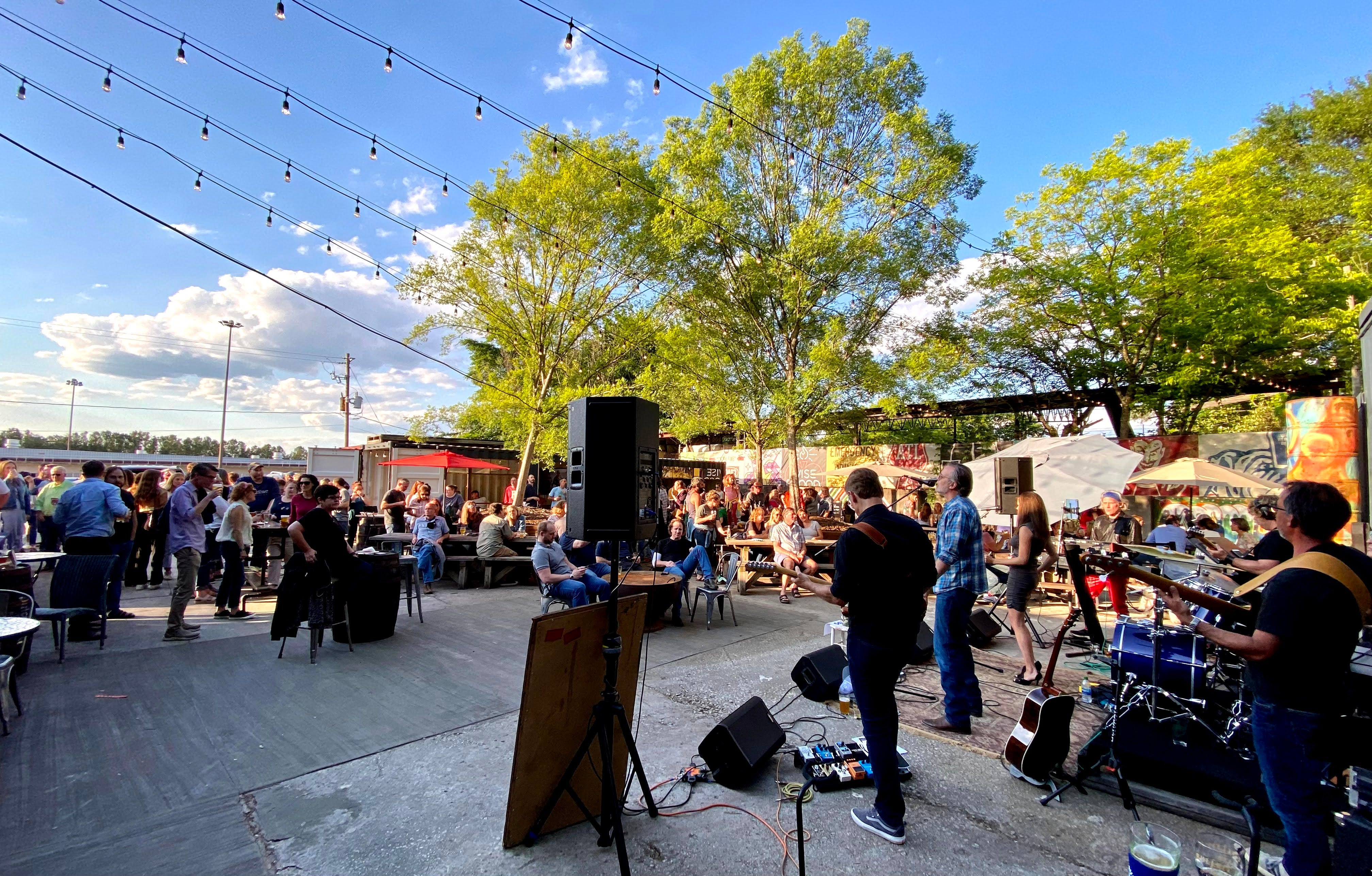
If you ask Nick why he does it, he’ll tell you something that sounds simple but carries a lot of weight: people need more social relationships than they may realize they’d benefit from. He believes—on a deep level—that when people rub elbows together, life naturally gets better.
And he’s also big on reps. He has this philosophy that quantity time yields quality time. He’d rather do something last minute than over-plan and never do it. He’d rather potluck than perfect it—because the point is to keep the rhythm going.
Nick tends to invite in bulk—group texts, broad outreach, big nets.
I tend to reach out one-on-one. Individual messages. Personal follow-ups. The kind of “Hey, you should come tonight” that makes someone feel seen rather than merely included.
A friend described it to me in a way that felt embarrassingly accurate: Nick moves through the room like a host, bouncing from group to group, keeping the whole thing stitched together. I’m more likely to spend a Happiest Hour in two or three deeper one-on-one conversations—checking in, listening, paying attention to where someone seems to be.
When some of my close friends back out of something I’ve invited them to, there’s no hassling. Just a quick confirmation that they’re wanted, that I get it, and that we’ll circle back soon.
I think that contrast matters. Community needs both: the person who pulls the room together and the person who notices who might be quietly fraying at the edges.
And if you want a tiny picture of how familiar it all is, the bartenders sometimes call me “Mr. Half Pour” because I’m constantly ordering half pints so I can sample more options without committing to just one. It’s such a small thing, but it’s also the point: the ritual is normal enough that people recognize your habits. You’re not a customer. You’re a person.
Neither approach is better. Both are necessary.
The culture isn’t an accident
People sometimes talk about community like it’s chemistry—like either you find “your people” or you don’t.
I’ve come to believe it’s less mystical than that.
Community is a choice. And then it’s a thousand small choices after that.
We’re welcoming because we choose to be, but also because the group has a kind of baseline empathy for the fact that life changes for people. Seasons get heavy. Work gets intense. Mental health dips. Kids happen. Parents age. Some weeks you’re “out of spoons.”
And still—when you can—showing up tends to make life better.
I can think of five or six people we didn’t even know six years ago who are now absolutely integral to the group. That doesn’t happen by accident.
It happens because someone notices a new person. Someone invites them again. Someone asks questions. Someone introduces them to others. Someone makes it normal for them to show up.
And of course, it’s a two-way street. We can open the door, but people still have to walk through it. They have to return the curiosity. They have to keep showing up. They have to decide they want this, too.
If a newcomer hung around our group for three hangouts and then had to describe what felt different, I think they’d say this:
We’re friendly. We model openness. We prioritize curiosity.
There’s less posturing than usual. Less “where do you rank?” energy. More “tell me your story” energy.
And we have enough shared foundation—decades of friendship for some of us—that we can absorb new people without feeling threatened by it.
The rituals that make it real
Beyond Happiest Hour, we gather constantly, mostly in ways that don’t feel formal enough to call “community-building,” but that’s exactly what they are:
Birthdays and little milestones
Holiday parties throughout the year
One or two camping trips annually
Ad hoc plans that become the best nights of the month
The random “who wants to hike and hit a winery this weekend?” text that somehow turns into a real plan
Unless something is at someone’s house, there’s no fixed host. No “committee.” No bureaucracy.
But there are unwritten rules—real ones, the kind you only learn by being in it:
Not everybody has to be invited to everything. (That sounds obvious, but it keeps the group from collapsing under its own weight.)
The weekly gathering is truly open. If you show up, you’re in. Every guest is part of the group.
Everyone can contribute. It’s not “Nick and Will’s social calendar.” People host. People propose ideas. People bring a friend.
Reps beat perfection. Potluck is fine. Last-minute is fine. The goal is frequency, not a flawless event.
And underneath it all: be kind, show up when you can, be curious.
And if you want the most transferable version of “how to build this,” I’d still put it like this:
A recurring open ritual (same time, same place, low friction, “all are welcome”).
Personal pursuit (one-on-one invitations that make people feel chosen).
A non-optional instinct during hard moments (presence plus practical help, not just words).
The hard moments that prove what’s real
The funeral was one example.
Another happened last year when our friend Jeff had a couple of strokes and spent about a week in the ER.
The first few days were a frenzy. Friends coming and going. Passing each other in the halls and elevators like we were running shifts—because in a way, we were.
One guy would step off an elevator and see another friend stepping on.
“How’s he doing?”
“I think he’s resting. He was more alert an hour ago.”
“Alright. I’ve got him until midnight.”
“Text the thread if anything changes.”
There were moments early on when a couple of guys were with Jeff and realized something wasn’t right—his speech started to slur—and they alerted the nurses. Not in a dramatic way. In the calm, steady way that says: We’re paying attention. This matters.
In that fluorescent limbo, help took a thousand forms. People sat. People cracked a joke at the right moment. People asked nurses questions the family didn’t have the energy to ask. People made sure Jeff wasn’t alone in the hours that feel longest.
There was a group text to coordinate hospital visits, and another thread to coordinate meals for the family. Food showed up. Rides happened. Logistics got handled without making anyone feel like a project.
If you’ve never watched a friend group become a care network in real time, it’s hard to describe. It’s messy and beautiful. It’s not polished. It’s just love expressing itself through presence and practicality.
And it taught me something I already believed but hadn’t fully felt: people show love differently.
Some friends are great at sitting quietly and listening.
Some are built for acts of service.
Some show love through organization.
Some through laughter.
Some through being the person who stays when the room gets heavy.
Those moments didn’t create the bonds—we already had them—but they solidified them. They reminded people, in the most concrete way possible, that they weren’t alone.
They had people.
Another kind of hard: the slow grief
Not every crisis is acute. Sometimes the hard thing is just… long.
About five years ago I was going through a divorce. It was one of those seasons where even when you’re “fine,” you’re not fine. You can function during the day, and then the quiet at night turns into its own kind of pressure.
During COVID, when everyone was trying to figure out how to be together while staying apart, my friends Randall and Shelley started inviting me over two or three nights a week to sit in their driveway and have drinks—socially distanced, sitting in folding chairs, talking under the open sky.
There wasn’t a big plan. No dramatic intervention. Just repetition.
They’d listen while I talked through the stresses and concerns and fears that come with divorce—the kind you don’t always want to dump on everyone, the kind you’re tempted to swallow and carry alone.
Those driveway nights didn’t fix my situation. But they steadied me. They reminded me I was still myself. They gave my mind somewhere safe to put the thoughts that were eating at me.
And I remember going home some nights feeling two things at once: still sad, still uncertain—and also deeply grateful. Because as lonely as divorce can be, I wasn’t alone in it.
The quiet tradeoffs (and why I still think it’s worth it)
When people don’t have this, they often assume it requires some extroverted superpower they don’t possess.
I don’t buy that.
I do think it requires choosing against a few things:
Comfort. Privacy. The illusion that you can build a meaningful life without being vulnerable. The convenience of always doing exactly what you feel like doing.
And sometimes it really is mundane. Life is about choices. Having community sometimes means missing a TV show you like, going to a restaurant that isn’t your favorite, or making small sacrifices you wouldn’t have to make if you stayed home.
Not long ago, some friends needed help. I was genuinely looking forward to having a free Saturday—one of those rare days where nothing is on the calendar. But I knew I’d end up enjoying their company so much that it would be worth it. And it was.
But here’s what I can say without hesitation: I have never regretted prioritizing community and relationships.
And I’ll say one more thing, plainly: for most people, their coworkers won’t be the ones who show up in the difficult times of life.
They won’t be the ones taking out the trash after the funeral.
They won’t be the ones sitting in folding chairs in your driveway when your life is falling apart.
Why this matters beyond my friend group
I’m increasingly convinced that one of the reasons we feel so brittle—socially, emotionally, even relationally—is that we’ve lost so much of our everyday community muscle.
We’re trying to survive modern life with fewer buffers.
Fewer standing rituals.
Fewer places where people keep showing up long enough to become real to one another.
And when the “hard thing” happens—because it always does—people discover too late that friendship can’t be microwaved.
It has to be built slowly. Repeatedly. In ordinary time.
Friday at the brewery matters because it’s ordinary.
The birthday parties matter because they’re not crises.
The camping trips matter because they create a shared story before anyone needs help.
That’s how the infrastructure forms.
A question to end with
If you don’t have this, I’m not writing to shame you.
I’m writing because I want more people to have it.
I want more adults—especially men—to become initiators instead of consumers of other people’s social labor.
I want more people to find their way into groups that are already warm, and I want more groups to stay warm when new people show up.
I don’t ask this lightly—because I’ve felt the weight of it myself.
And I want you to ask yourself one honest question:
Who would notice if you disappeared for a month—and who are you making sure doesn’t disappear?