
The Fire They’re Hoping For
MLK Day, 2026, and the discipline we cannot afford to lose

Last week I watched White House Press Secretary Karoline Leavitt go after a reporter for asking what sounded like a simple, factual question. Not a “gotcha.” Not an editorial speech—just a question trying to pin down reality.
I was sitting on my couch with the TV too loud and my phone in my hand, half-watching, half-doomscrolling. And I felt my body tighten in real time.
Not because I was surprised by the posture. But because I know what happens next. The clip gets chopped into a dozen versions. Partisans on both sides turn it into proof. The facts get buried under performance. And the longer the White House treats truth like a prop, the more it pours gasoline on an already volatile moment.
Because when truth becomes negotiable, emotions don’t cool—they inflame.
This MLK Day—January 19, 2026—I’m thinking about a particular kind of temptation.
Not the obvious one (posting a quote and moving on), but the deeper one: the urge to meet a moment of state force with our own force—and to call it righteousness.
Over the past couple of weeks, the headlines have felt like dry kindling. Growing protests over ICE enforcement and Venezuela. Growing anxiety about democratic norms, constitutional restraints, and the steady testing of what the public will tolerate.
If you feel a pit in your stomach reading that list, you’re not alone.
And it’s exactly here—when we’re afraid, furious, and morally certain—that we become most vulnerable to the lie that violence will save us.
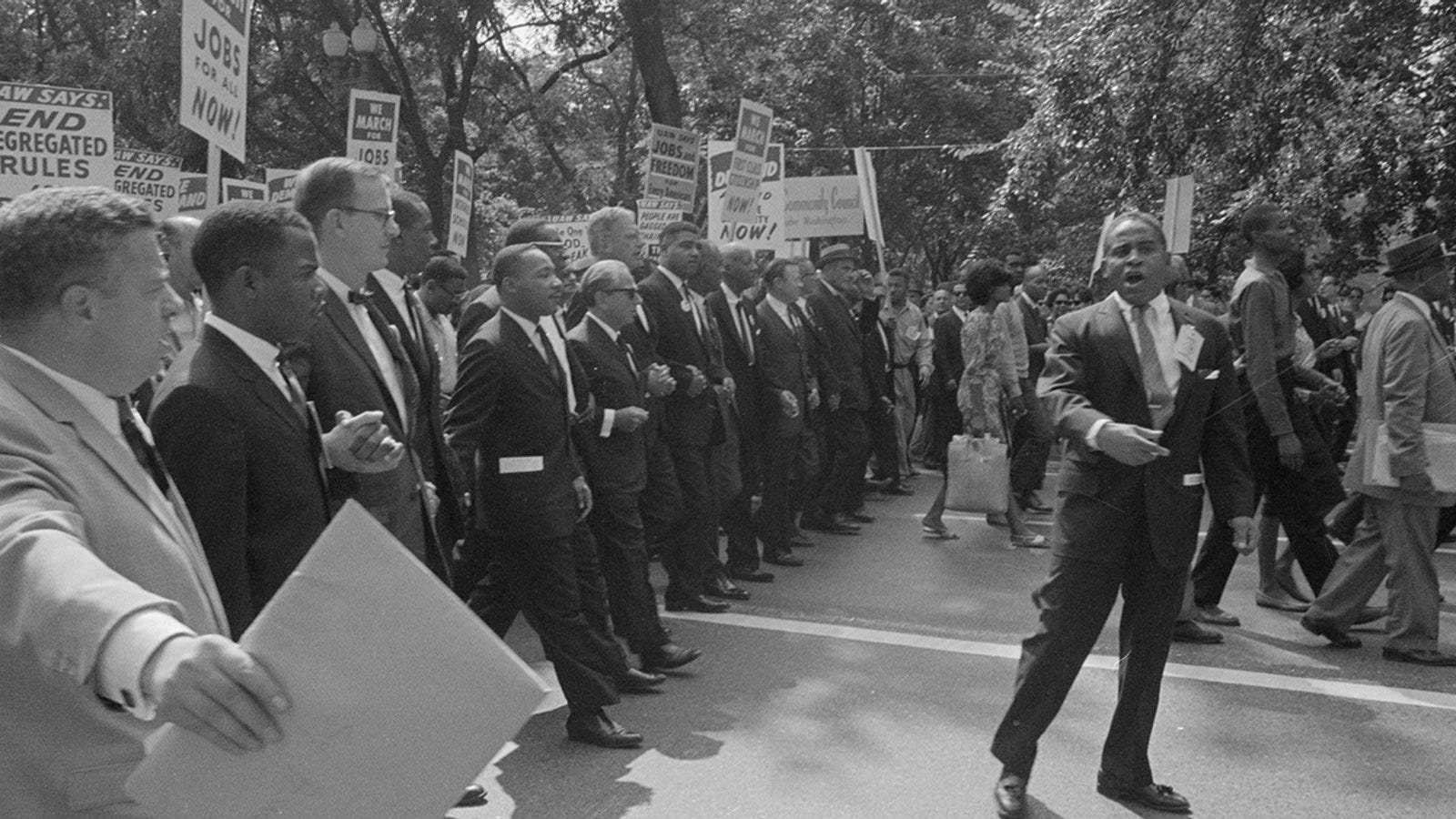
A word about posture
I’m also aware that I’m a white man writing about a Black holiday.
So I want to be clear about my posture: I’m not trying to center myself in a day that carries particular meaning and weight for Black Americans.
I’m trying to let Dr. King’s witness judge my instincts—especially as someone who has benefited from the systems he confronted. If I’m going to write anything today, it should be less performance and more repentance. Less branding, more obedience.
I also want to be clear about why I’m saying any of this. I don’t oppose the Trump administration because “my side” is against “their side.” I oppose it because I’m pro–American in the deepest sense: pro-Constitution, pro-rule of law, pro-democratic norms, pro–peaceful transfer of power, pro–civil liberties. I’m not interested in trading one form of political domination for another. I’m interested in protecting the fragile architecture that makes pluralism—and justice—possible.
And if I’m honest, I have to name my own susceptibility too: there’s a part of me that wants to “hit back” when I feel lied to—online, in conversation, in the tone I take with people I’m sure are wrong. That impulse is exactly what this moment feeds on.
The threat isn’t only what the state will do. It’s what we’ll become.
Here’s my prophetic conviction for this moment:
The Trump administration does not need violent protests to justify escalation. But violent protests would make escalation easier—and make it look inevitable.
We’ve seen this pattern before in history: when a society is afraid, “order” language becomes permission. And once escalation begins, it rarely lands on the powerful first.
That’s the trap: if the opposition becomes violent, the story becomes simple.
Not “What is the government doing?” but “How do we stop the chaos?”
Not “Who is being harmed?” but “Who threw the first punch?”
Violence doesn’t just risk lives. It hands the moral center of the narrative to the people most eager to seize it.
MLK’s nonviolence wasn’t a vibe. It was a refusal.
Dr. King’s language about nonviolence is often softened into something like “be nice.”
But he didn’t preach niceness. He preached a kind of courageous restraint that exposes injustice without mirroring it.
Nonviolence is not passivity. It’s a refusal to let rage rewrite your ethics. It’s the discipline of fighting for justice without surrendering your humanity in the process.
King understood something we keep forgetting:
If the means are corrupt, the ends will be, too.
If you oppose authoritarianism, don’t imitate its spirit
Let me say this as plainly as I can:
If you believe the current administration is threatening democratic norms—rule of law, civil liberties, accountability—then you cannot respond by abandoning moral restraint yourself.
Authoritarianism feeds on disorder. It needs an enemy that looks like a menace.
So if you’re marching, organizing, or protesting right now—especially on issues like immigration enforcement, civil liberties, or the expansion of executive power—do not give them the fire they’re hoping for.
Not because the cause isn’t righteous.
Not because anger is wrong.
But because violence will do what violence always does:
It will expand the state’s permission to crush dissent.
It will blur the moral line between oppressor and opposed.
It will make ordinary people choose “security” over justice.
It will put the vulnerable—immigrants, minorities, the poor—at greater risk first.
In other words: violence will punish the very people we claim to stand with.
And I want to name beauty alongside the brokenness: a lot of people in the streets right now are not looking for chaos. They’re looking for dignity. They’re showing up tired and scared and still choosing courage. That matters. That’s the kindling we actually need.
One small practice, if you’re going to protest: go with someone you trust, and decide ahead of time that if things turn violent, you leave. Not because you’re afraid of conflict—but because you refuse to be used.
Love is not soft. Love is strategy plus soul.
King taught that love is not sentimental, and it is not fragile. It’s disciplined. It refuses to dehumanize. It insists:
I will not become what I am fighting.
I will not treat another person’s humiliation as entertainment.
I will not let my rage rewrite my ethics.
And yes: love can look like protest. Love can look like civil disobedience. Love can look like sustained, stubborn public pressure.
But love cannot look like burning the neighborhood down to prove you’re serious.
MLK Day is not a museum. It’s a mirror.
If you want to honor King tomorrow, don’t start with a quote.
Start with a question that stings.
Because the truth is, a lot of us—across the spectrum—are looking for permission right now. Permission to do what we’re certain we’d condemn if the other side did it first.
King’s life offers a different path: not naïveté, but holy resistance—a resistance that can’t be easily caricatured, a resistance that forces the nation to see what it is doing, a resistance that refuses to surrender its humanity.
That is what we need now—more than ever.
Not because it’s polite.
Because it’s the only way through that doesn’t destroy us on the way out.
What would it look like, this week, to practice nonviolence in my speech, my posting, and my protesting—even when my anger feels justified?
The thing is that history teaches us that, once a tyrant is ensconced, unless there is sustained protest, violence is the only way to get them out.
In the US where protests are sanctioned by authorities and given a location and duration, they are not sustainable. The people being protested against know the disruption (if there is any) will only last a few hours and will be contained in a certain geographic area.
This is also a different circumstance than the fight for civil rights. In that fight, the end goal was not the capitulation of a head of state. And, unless I misunderstand today's protests (and if the citizenry is being honest with itself) that is the end goal. Whether it's through impeachment and trial, electing a Congress with a backbone, or protests, this seems to be the goal.
We are in a dangerous period.