
Building Density Without Transit Isn’t Growth — It’s Congestion by Policy
Atlanta keeps showing us the city we want. The question is whether we’re willing to build for it.

A couple of weeks ago, I headed out on what I thought was going to be a chill Saturday morning in Atlanta.
I had made coffee before leaving the house. The weather was beautiful—the kind of unseasonably warm morning that makes the city feel especially alive. I was in no rush. I had a simple list of errands to run, including a stop at Ikea, and it felt like the sort of relaxed Atlanta morning you’re supposed to enjoy before the day fills up.
Then I hit the Downtown Connector.
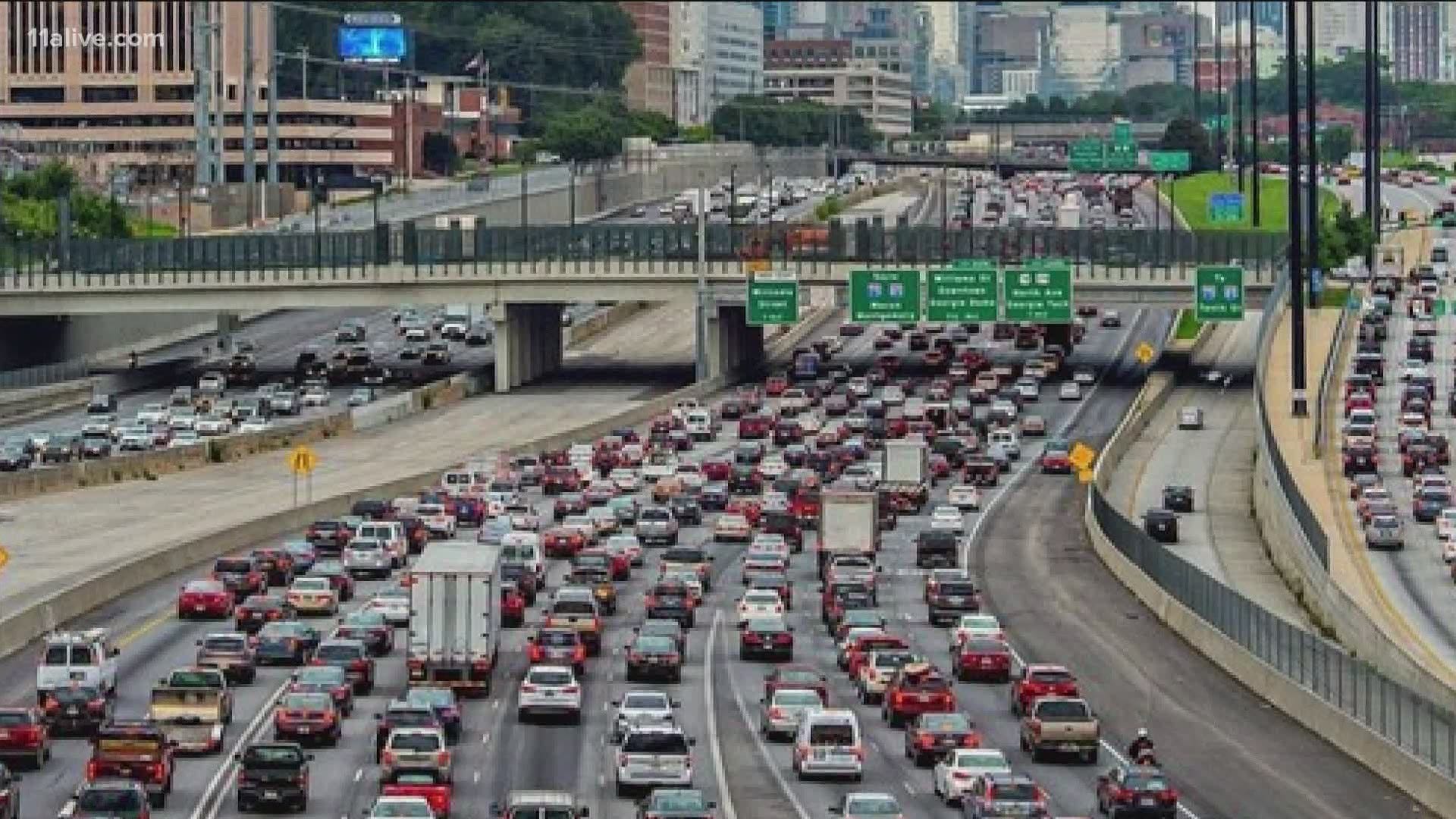
No rush hour. No major event. No obvious reason for trouble. And somehow there I was anyway, crawling in bumper-to-bumper traffic, staring at a long line of brake lights on a perfectly pleasant Saturday morning. What had started as one of those small, ordinary moments of ease quickly turned into a reminder of how often Atlanta interrupts itself.
That kind of thing happens here so often that we almost stop questioning it. Atlanta talks about traffic the way people talk about weather. It’s annoying. It’s constant. It’s somehow nobody’s fault.
But a lot of what frustrates us about traffic in this city isn’t accidental. It’s not just the unavoidable cost of growth or the price of being a major metro area. It’s the result of a set of policy choices that don’t fit together.
We say we want affordability, but we make it too hard to build enough housing.
We say we want vibrant neighborhoods, but we underinvest in transit.
We say we want relief from congestion, but we keep reaching first for more lanes and more pavement.
Atlanta doesn’t have a simple growth problem or transportation problem.
Atlanta has a coordination problem.
The Atlanta People Actually Love
That’s what makes this so frustrating.
Because Atlanta isn’t a city without examples of the good life. In fact, one of the best things about Atlanta is that it’s a city of great neighborhoods.
Think about places like Inman Park, Virginia-Highlands, Decatur, Brookhaven, Chamblee, Roswell, or Norcross. These places aren’t identical, and they aren’t urban in exactly the same way, but they share something important: they feel livable.
They offer some mix of homes, restaurants, shops, parks, coffee, and ordinary daily life in a way that feels human-scaled. They let people imagine a life where not every small outing becomes a logistical exercise.
That’s part of what people love about Atlanta—not the city in the abstract, but the feeling of a neighborhood with a little life in it.
A grocery store nearby.
A restaurant down the road.
A coffee shop where people actually linger.
Streets where life feels shared rather than atomized.
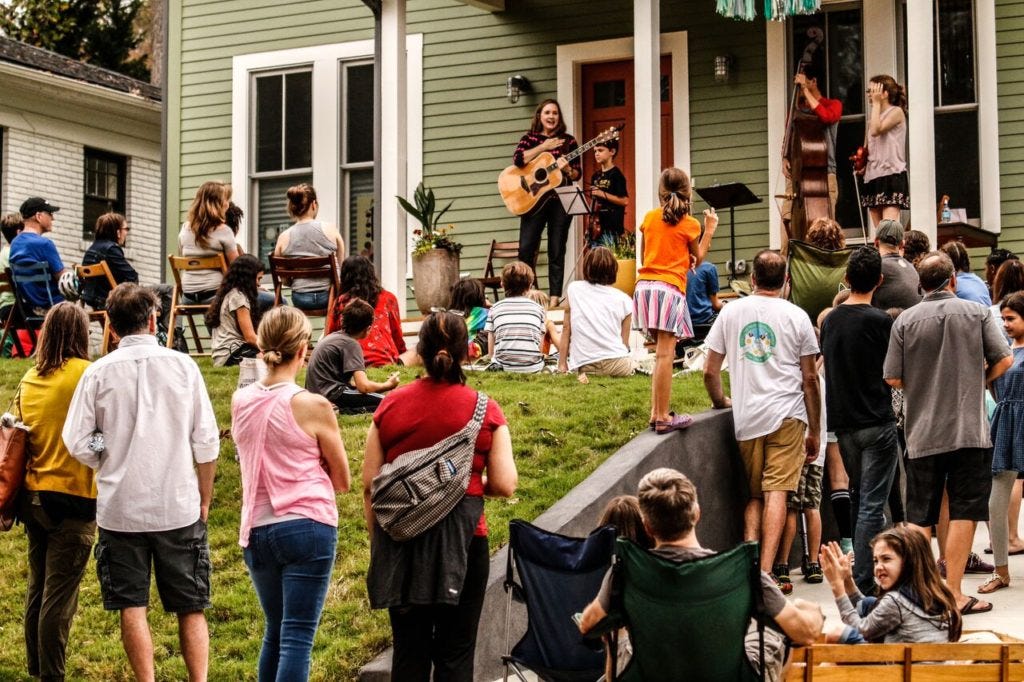
If you want a picture of that at its best, you could do worse than Oakhurst Porchfest.
Every year, front porches become stages. Bands play to crowds gathered on lawns and sidewalks. People wander from block to block with friends, kids, folding chairs, drinks, and dogs.
People come from all over Atlanta—but once they get there, the point is to stop moving like commuters and start moving like neighbors.
You walk.
You listen.
You run into people.
You stay longer than you meant to.
Nobody loves Porchfest because it’s efficient.
They love it because, for a few hours, the city feels the way a city should feel: social, local, walkable, alive.
That’s the good I’m trying to protect here.
And part of my frustration is that Atlanta keeps giving us glimpses of the kind of neighborhood life many of us want—then making it hard for that life to exist beyond a few pockets.
Atlanta knows how to create desire for neighborhood life.
It’s been much less willing to build the systems that would allow more people to actually have it.
We Need More Housing. We Also Need Better Rules.
To be clear, density is not the enemy.
Atlanta has an affordability problem, and there is no serious way to address that without building more housing.
A growing city needs more homes. Apartments, townhomes, duplexes, accessory units—the kinds of housing that allow more people to live near the places where life is happening.
If we’re honest about what is happening to prices in Atlanta, then more development has to be part of the answer.
Scarcity isn’t compassion.
Restricting supply isn’t how a city stays affordable.
And zoning is part of the problem.
For too long, too much of our housing conversation has assumed that the highest civic good is keeping change away. We talk as if every additional home is a threat to a neighborhood rather than part of what allows a neighborhood to remain open to more than just the people who bought in early.
Whatever else we call it, it usually means the same thing: fewer homes, higher prices, and a city that gets harder to stay in.
And I do understand why this is hard for people.
When residents hear talk of density, they aren’t picturing a more humane city. They’re picturing overflow parking, disappearing trees, construction noise, pressure on schools, and the slow erosion of the neighborhood character they moved there for.
That fear isn’t imaginary.
And honestly, some of that resistance isn’t just fear of newcomers.
Sometimes it’s grief.
People have watched parts of Atlanta change in ways that felt thinner, pricier, less rooted. They hear promises about growth making life better, and what they remember instead are flipped houses, higher taxes, more traffic, and places they used to love feeling less like their own.
Even when I think those fears lead to the wrong conclusions, I don’t think they’re irrational.
But that’s exactly why the answer can’t just be to stop change.
The answer has to be better change.
The real choice isn’t between growth and no growth.
The real choice is between coordinated growth and chaotic growth.
More Roads Won’t Save a Car-Dependent City
That brings us to transportation.
Building more housing while preserving near-total car dependence isn’t a real growth strategy. It’s just a way of forcing more people into the same bottlenecks and pretending surprise when the roads break down under the weight of it.
I see this on a small scale near where I live.
I live near Toco Hills, and North Druid Hills Road runs right through the area. There are plenty of reasons to want to spend time there—restaurants, businesses, everyday errands.
It should be a neighborhood asset.
But more and more, I find myself avoiding it because the traffic has become so bad that it changes the calculation before I even leave the house.
And I have to believe that affects the businesses there too. At some point, an area becomes harder to enjoy not because it lacks value, but because getting in and out becomes such a hassle that people start opting out.
I see something similar near Lakeside High School. Traffic around pickup and drop-off is normal. But the approval of a charter school in an old church nearby added another wave of congestion without any meaningful transportation plan.
More activity can be good.
More people can be good.
Density can be good.
But density without coordination just makes everyday life harder.
This is why I keep coming back to induced demand.
When the answer to congestion is always more lanes and more pavement, what often happens is temporary relief followed by the same problem returning.
Which is why it’s discouraging to see political leaders continue to default to road expansion as the serious answer.
I understand the instinct. Nobody sitting in traffic dreams about policy frameworks. A road project sounds tangible.
Transit sounds uncertain.
And to be fair, that skepticism didn’t come from nowhere. Atlantans have watched transit plans get watered down, timelines slip, and confidence erode.
But sounding believable isn’t the same thing as solving the problem.
Years ago, when I lived in Brookhaven, I lived near Georgia 400 back when the toll was still there. Plenty of times I could have hopped on it for convenience.
Sometimes I did.
Plenty of other times I didn’t.
The toll created friction. It forced a small question: Is this worth it?
People respond to incentives.
And right now Atlanta sends a pretty clear signal:
Drive if you can. Sit in traffic if you must. Don’t expect many alternatives.
MARTA Isn’t an Accessory
That’s why this article isn’t just about roads.
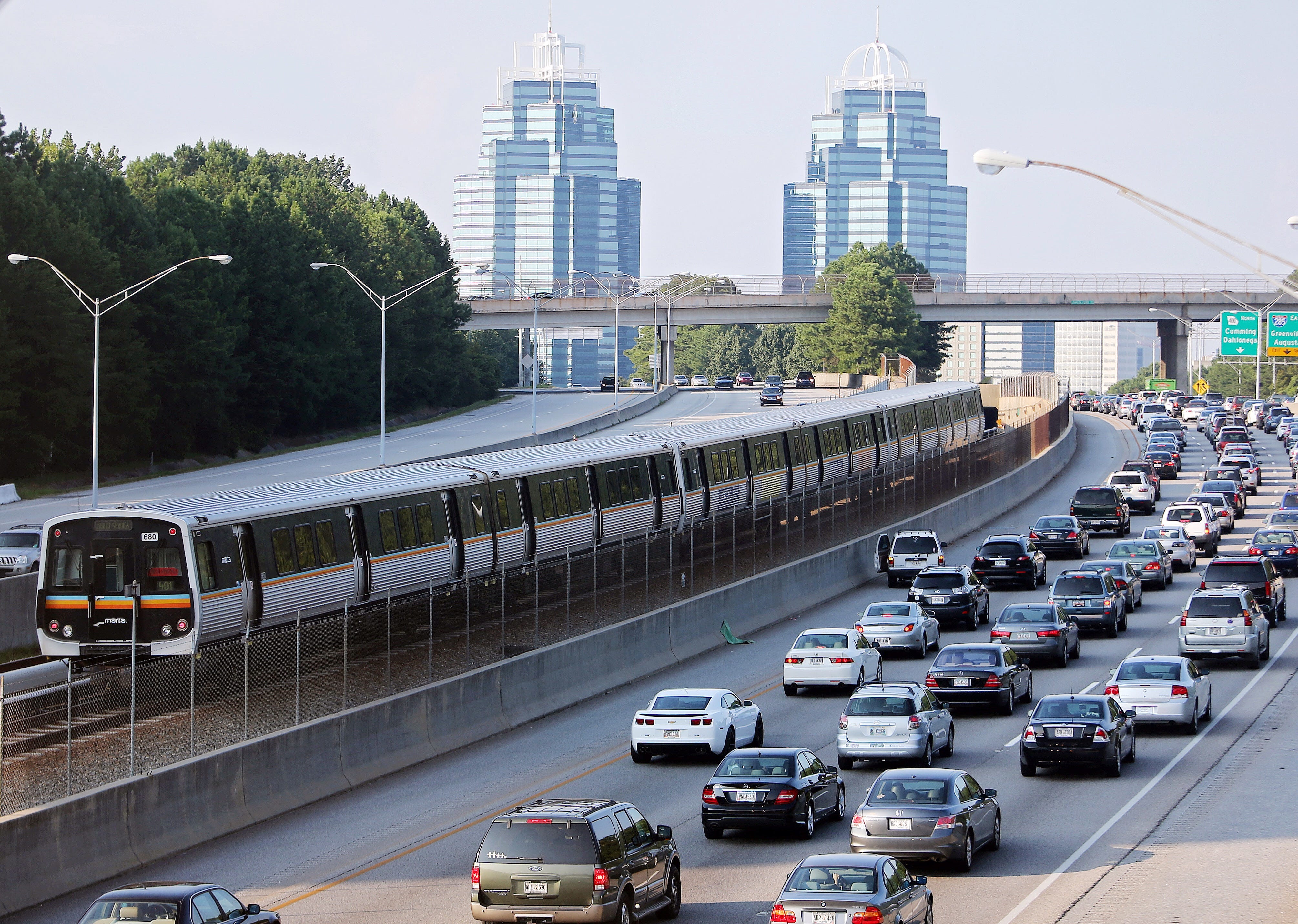
It’s about MARTA.
Transit isn’t something you add once a city becomes successful.
If Atlanta is serious about becoming denser, more affordable, and more livable, transit is part of the basic architecture.
Without it, more people and more buildings mostly feel like more traffic.
The neighborhoods Atlantans love already point toward what people want: walkability, proximity, local life.
But those goods become much harder to sustain when every new home or business pours more cars into the same overstretched road network.
A real growth strategy would treat housing, zoning, and transit as inseparable.
Build more housing because affordability demands it.
Reform zoning because scarcity is partly self-inflicted.
Invest in MARTA because if more people are coming but the only real option is still to drive, then what we call growth will mostly feel like more traffic.
Those aren’t three separate agendas.
They’re one agenda.
A City Worth Choosing On Purpose
I’m not writing this as someone above the problem.
I drive plenty.
I choose convenience plenty.
Like most Atlantans, I live inside the very system I’m criticizing.
Maybe that’s part of what bothers me most.
I know how easy it is to settle for a car-first life, even while wanting something better.
Because what makes this feel bigger than traffic is that cities don’t just move us around.
They shape us.
They shape how much margin we have.
How spontaneous our lives can be.
How easily we see neighbors.
How willing we are to say yes to one more invitation.
A city built around constant friction trains people to live defensively.
It makes every outing more calculated.
Every errand more draining.
Every invitation a little easier to decline.
Over time, that doesn’t just change how we travel.
It changes how we live.
It’s not just that Atlanta is crowded.
It’s that a city can train people to accept smaller lives.
And yet Atlanta keeps showing us what the better version could look like.
A neighborhood where daily life is close at hand.
A business district people can enjoy instead of endure.
A front-porch concert.
A walk to dinner.
A Saturday that feels open instead of gridlocked.
That version of Atlanta isn’t imaginary.
We’ve already built pieces of it.
The question is whether we’re willing to build more of the city around that vision.
Building density without transit isn’t growth.
It’s congestion by policy.
But Atlanta is too good a city to keep settling for that.
The life we say we want is still available.
We just have to decide to build toward it.